Who Walked Here?
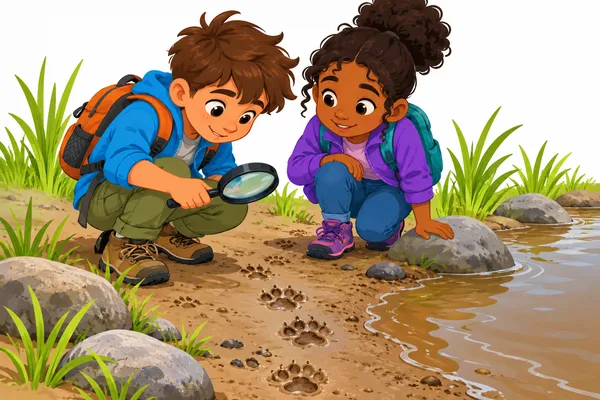
1Animals leave clues everywhere they go. After a rainy night, the soft mud beside a creek can hold their footprints until the sun dries it. People who study these prints are called trackers. With a little practice, children can become good trackers, too.
2Some of the easiest tracks to spot belong to raccoons. Their front paws have five long toes, so the prints look like tiny hands. Foxes and wolves leave prints with four toes in a neat oval. You can often see small claw marks in front of their toes. Bobcats usually pull in their claws when they walk, so their prints often show no claw marks.
3Deer and moose walk on hooves. Each hoof is split into two parts, so a deer track looks a bit like an upside-down heart. A moose track has the same shape, but it is much bigger. Young moose, called calves, leave smaller hearts beside the big tracks of the adults.
4Birds leave tracks, too. Ducks and geese have webbed feet, so you may see thin lines of skin between their three front toes. Wild turkeys are much bigger birds, and their prints show three long, thin toes.
5Small prints can tell a story, too. Mice take quick little hops, and their tails sometimes drag a thin line behind them. Rabbits hop in a surprising way: their long back feet land in front of their front feet. So next time you walk by a muddy creek, bring a notebook and look down. Who walked there before you?