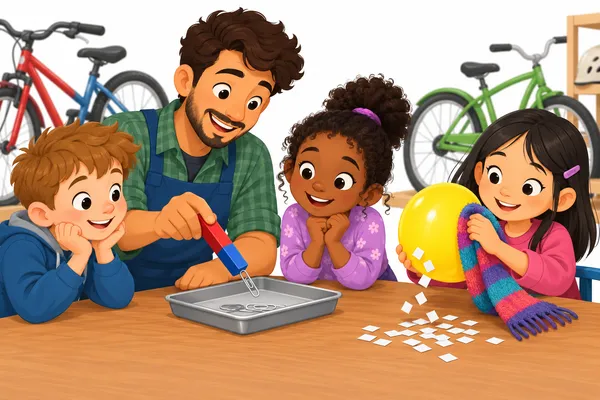
Science on a Busy Block
Buses pass, bells ring, and neighbors stop at the corner bike shop. During a neighborhood science afternoon, the shop hosts two small investigations inside, away from street breezes. An adult handles the magnets and keeps them away from mouths and electronic devices.
For the first investigation, the group places a steel paper clip on a smooth tray. They hold a bar magnet still near the clip, leaving a gap. They change only the starting gap. They keep the magnet, clip, tray, and facing end of the magnet the same. At each gap, they make five tries. Each try lasts five seconds. They count a success only if the clip begins moving toward the magnet before the two touch.
For the second investigation, the group uses balloons and tiny paper squares. Rubbing a balloon with a dry wool scarf can give it electric charge. The group changes the number of rubs. They record whether the paper starts moving toward the balloon while a gap remains. Both investigations record motion, not just whether objects eventually touch.