OwlSheets Students
← Exit

A Year Along River and Coast

0 / 13

A Year Along River and Coast

Follow a seasonal timeline of two Native nations.

Follow the Seasons

Read the introduction and timeline. The seasons move in order from spring to winter.

Two Homelands, One Year of Seasons

Mandan and Wampanoag people are living peoples with communities today. This timeline describes some traditional activities before electric tools and refrigerators. It is not a record of one family's year. Families' activities varied with weather and local conditions. The Mandan homeland includes the Missouri River region of the northern Great Plains. The Wampanoag homeland includes coastal areas of what are now Massachusetts and Rhode Island.

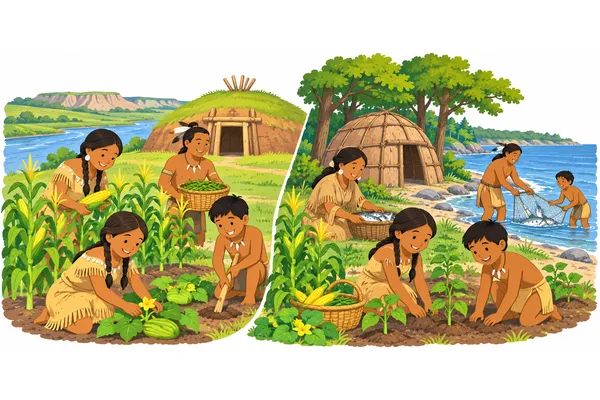
SPRING → Mandan gardeners prepared river-bottom soil and planted corn, beans, and squash. They used hoes, including hoes made with bison shoulder bones, to work the soil. In Wampanoag communities, people caught fish moving through rivers in spring. Nets and woven fish traps helped with this work. Wampanoag families also planted corn, beans, and squash.

SUMMER → Mandan gardeners tended their crops. Some groups traveled to hunt bison on the grasslands. On hunting trips, hide-covered tipis could be taken down and carried. Back in villages, earth lodges had wooden frames covered with earth. Wampanoag people gathered shellfish along the coast and cared for gardens. Their wetus had bent sapling frames covered with mats or bark. Nearby woods supplied these building materials.

AUTUMN → Mandan families harvested their gardens. They dried foods and kept supplies in storage pits. Bison supplied meat, hides, and bones used for tools. Wampanoag families also harvested crops and dried food. They gathered nuts from woodlands. Baskets helped carry gathered foods and crops. Drying food reduced the need to find fresh food each day.

WINTER During cold weather, stored foods helped feed families in both nations. Hunting continued, too. Mandan earth lodges offered shelter from cold Plains winds. Wampanoag bark-covered wetus sheltered families during cold weather. People also repaired tools and made useful objects. The next spring brought another round of planting, fishing, and other seasonal work.

1.
Why does the timeline arrange activities by season rather than by nation?
Question 1 options
2.
Which sequence follows the Mandan garden work in the timeline?
Question 2 options
3.
Circle the TWO details that are evidence that Mandan bison hunting supplied more than food.

4.
A timeline card says, “Wampanoag families gather nuts and dry their harvested crops.” Where does it belong?
Question 4 options
5.
A Mandan hunting group is preparing to move to another hunting place. Which shelter feature would be most useful?
Question 5 options
6.
How did autumn work help families during the next season?
Question 6 options

Use the Timeline

Return to the timeline for evidence. Think about the order of work and the resources in each homeland.

7.
A student moves the Mandan harvest card to before the spring planting card in the same growing year. What is the best correction?
Question 7 options
8.
Circle the TWO timeline details that connect Wampanoag work directly to water resources.

9.
A Wampanoag family needs to repair a wetu's frame before cold weather. Which place would provide the material described in the timeline?
Question 9 options
10.
A student says, “Mandan families who grew crops would not need hunting tools.” Which timeline connection best corrects this mistake?
Question 10 options
11.
Which caption best connects the spring and autumn tool details?
Question 11 options
12.
Make a claim about how work in one season helped families in a later season. Use two connected details from the timeline and explain the connection.
13.
A timeline needs this caption: “People used different parts of their homelands for different jobs.” Support this claim with one Mandan example and one Wampanoag example. Explain how each place or resource helped.